End-to-end workflow
Run a walk-in repair without a fictional appointment
Use this path when a vehicle is already at the shop and no future time slot was booked. A walk-in is not permission to skip customer identity, inspection, price approval or execution controls.
Written by the VMOTEK Product Team · Updated August 14, 2026
01
1. Confirm roles and prerequisites
Run this workflow with named users and representative test data before using it with a customer. An owner or manager configures the policy; operational staff execute only the actions their role and shop access permit. Confirm the active shop in the header before creating a transaction because appointments, work orders, inventory movements, purchasing and invoices retain that location.
- Advisor: identifies the customer and vehicle, records intake and creates the estimate or work order.
- Technician: performs only assigned or claimable authorized work.
- Manager: approves any documented exception allowed by company policy.
- Select the actual performing shop and confirm it has an active workflow, capacity and payment configuration.
- Search before creating the customer, vehicle or part to avoid duplicate master records.
02
2. Execute the workflow from beginning to end
Follow the sequence below in order. Continue from the record already created instead of recreating the customer, vehicle, estimate, appointment or work order. At every handoff, reopen the destination record and confirm its source relationship, shop, status and amounts before proceeding.
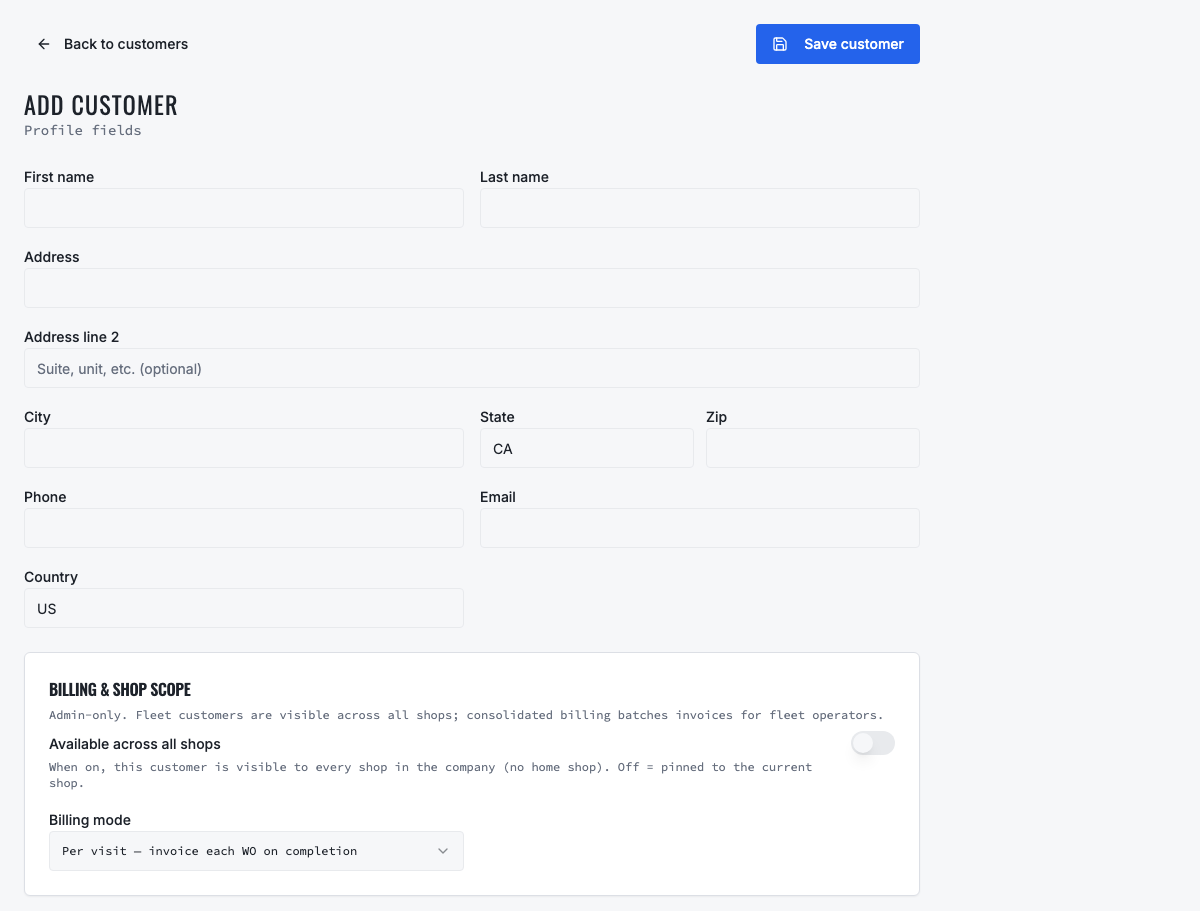
- Customers: find or create the customer, confirm contact information and open or add the vehicle with VIN, plate and current mileage.
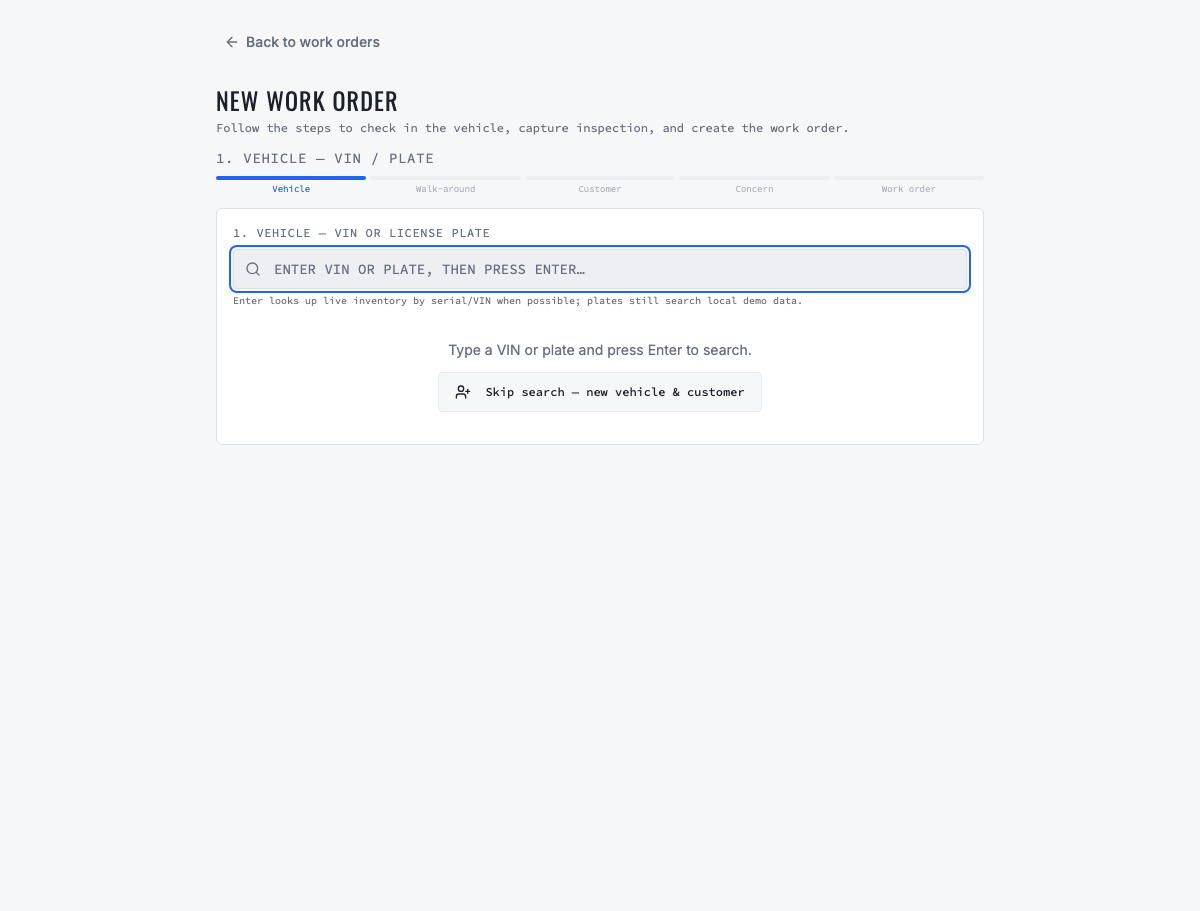
- Work Orders → New Work Order: select the customer, vehicle and current shop; record Walk-in as the source when available and describe the concern.
- Complete intake and inspection. Add an estimate when authorization is required; send it and wait for the recorded decision.
- Apply approved labor, service packages and inventory-linked parts to the work order. Confirm availability before marking Ready.
- Assign or claim the work, move it to In Repair and record actual findings and quantities. Obtain reapproval for changed scope.
- Complete the work, create the invoice, collect payment and mark delivery using the normal controls.
03
3. Test the blocked and exception paths
A workflow is not ready merely because its normal path succeeds. Repeat the test using the conditions below. VMOTEK should explain why an action is unavailable, retain the existing record and prevent duplicate, stale, unauthorized or physically impossible activity. Do not bypass a business control by creating an unrelated replacement record.
- Do not create a backdated appointment merely to make the path resemble scheduled work.
- Block work when customer/vehicle identity, authorization or required intake is missing.
- Do not let a manual description silently consume an unrelated inventory item.
04
4. Verify records, inventory and financial effects
Open the related records after execution and reconcile them. The customer and vehicle remain company-wide identities, while the appointment, estimate, work order, inventory activity, purchase or transfer, invoice and payment retain the responsible shop. Status labels are operational evidence, not substitutes for checking quantities, totals and source links.
- The work order remains the visit's operational record even though no appointment exists.
- Estimate/approval exists when price authorization was required and points to the same job.
- Inventory and invoice effects match the performing shop and actual quantities.
05
5. Confirm customer communication
Use the customer's permitted contact channel and preserve delivery status. A sent message does not equal approval, payment or receipt. Continue only from the authoritative decision or transaction status. Email and SMS availability depends on the shop's connected providers, customer contact data and consent settings.
- Send the approval link when required and a ready-for-pickup message after completion.
- If the customer waits on site, still record the authorization method and outcome.
06
6. Completion checklist
The journey is complete only when the final business outcome and the expected audit trail agree. Record any failed check, correct configuration or source data, and rerun the scenario from a clean test record.
- No fictional or duplicate appointment was created.
- Customer history shows the walk-in work order, invoice and payment together.
- Status, stock and financial totals match the work performed.
Related product areas
Understand the capability behind the task
Continue to the applicable platform page for workflow behavior, role differences and connected operating consequences.
Ready to move forward?
Need help with your configuration?
Existing customers should use in-product support for account-aware assistance. Evaluation teams can contact us to discuss requirements.