End-to-end workflow
Source an appointment part with an inter-shop transfer
Use this workflow when another VMOTEK shop has transferable stock and purchasing is unnecessary or less appropriate than internal movement.
Written by the VMOTEK Product Team · Updated August 14, 2026
01
1. Confirm roles and prerequisites
Run this workflow with named users and representative test data before using it with a customer. An owner or manager configures the policy; operational staff execute only the actions their role and shop access permit. Confirm the active shop in the header before creating a transaction because appointments, work orders, inventory movements, purchasing and invoices retain that location.
- Requesting advisor/parts user: identifies shortage and destination demand.
- Source-shop authorized user: approves or dispatches under the source shop's policy.
- Destination receiver: confirms controlled-transfer receipt.
- Both locations and users must have valid access; the source shop controls Quick versus Controlled mode.
- Confirm transferable available quantity, item identity, unit/lot cost and destination appointment.
02
2. Execute the workflow from beginning to end
Follow the sequence below in order. Continue from the record already created instead of recreating the customer, vehicle, estimate, appointment or work order. At every handoff, reopen the destination record and confirm its source relationship, shop, status and amounts before proceeding.
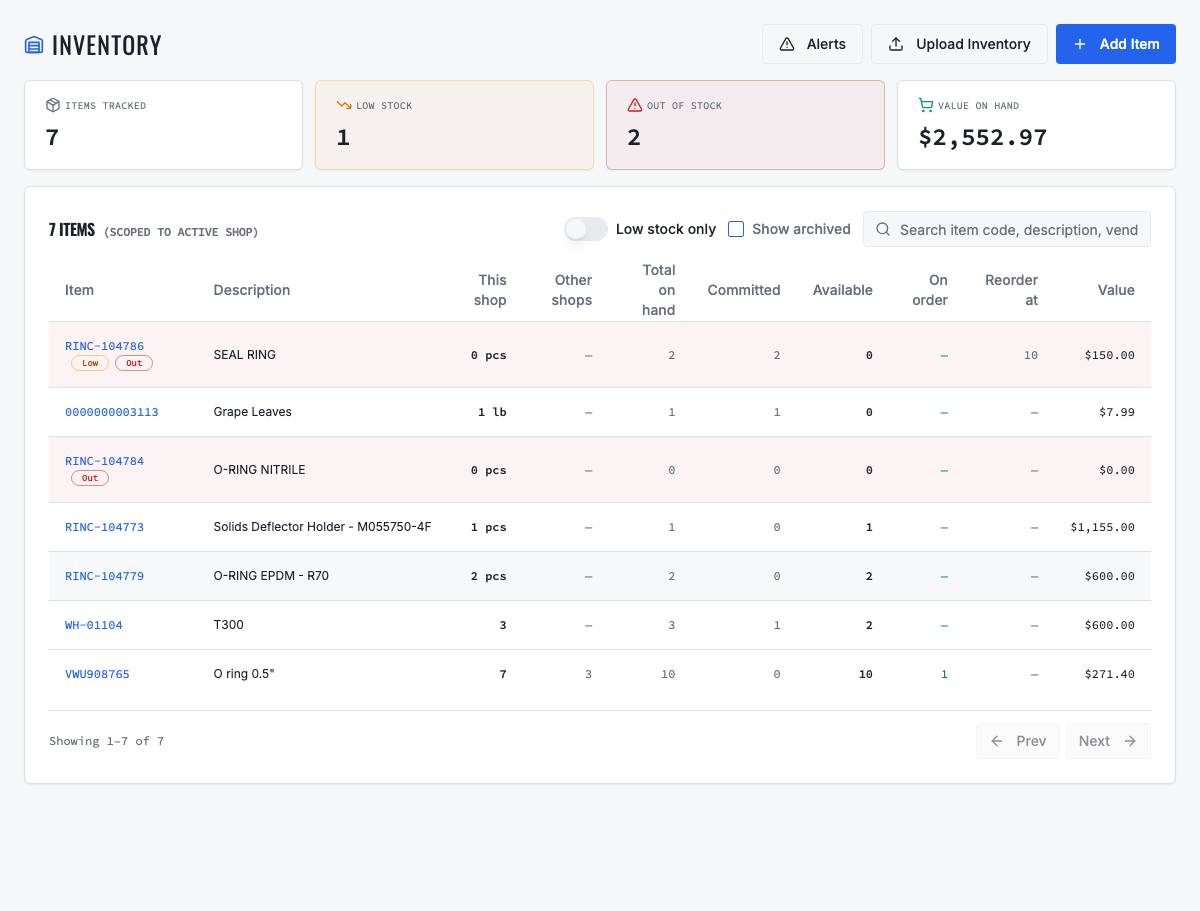
- Inventory: select the performing shop, open the item and compare This shop, Other shops, committed and available quantity.
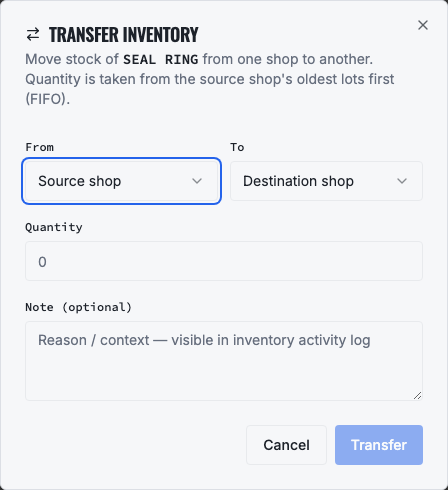
- Open Transfers and create the request with source, destination, item, quantity and reason/reference to the customer demand.
- If source policy is Quick, execute the authorized transfer and verify both balances change together. If Controlled, submit and wait for approval.
- For Controlled mode, source staff approve and dispatch; verify source on-hand falls and quantity appears In transit, not at destination.
- Destination staff open the transfer, record received, damaged or short quantities and complete receipt.
- Reopen the appointment/work order, confirm destination availability and continue reservation, repair and invoicing.
03
3. Test the blocked and exception paths
A workflow is not ready merely because its normal path succeeds. Repeat the test using the conditions below. VMOTEK should explain why an action is unavailable, retain the existing record and prevent duplicate, stale, unauthorized or physically impossible activity. Do not bypass a business control by creating an unrelated replacement record.
- The initiator cannot choose Quick merely to bypass a source-shop Controlled rule.
- Insufficient available quantity, same source/destination or unauthorized shop access must block creation.
- Repeated dispatch/receipt and received quantity above dispatched must not duplicate stock.
04
4. Verify records, inventory and financial effects
Open the related records after execution and reconcile them. The customer and vehicle remain company-wide identities, while the appointment, estimate, work order, inventory activity, purchase or transfer, invoice and payment retain the responsible shop. Status labels are operational evidence, not substitutes for checking quantities, totals and source links.
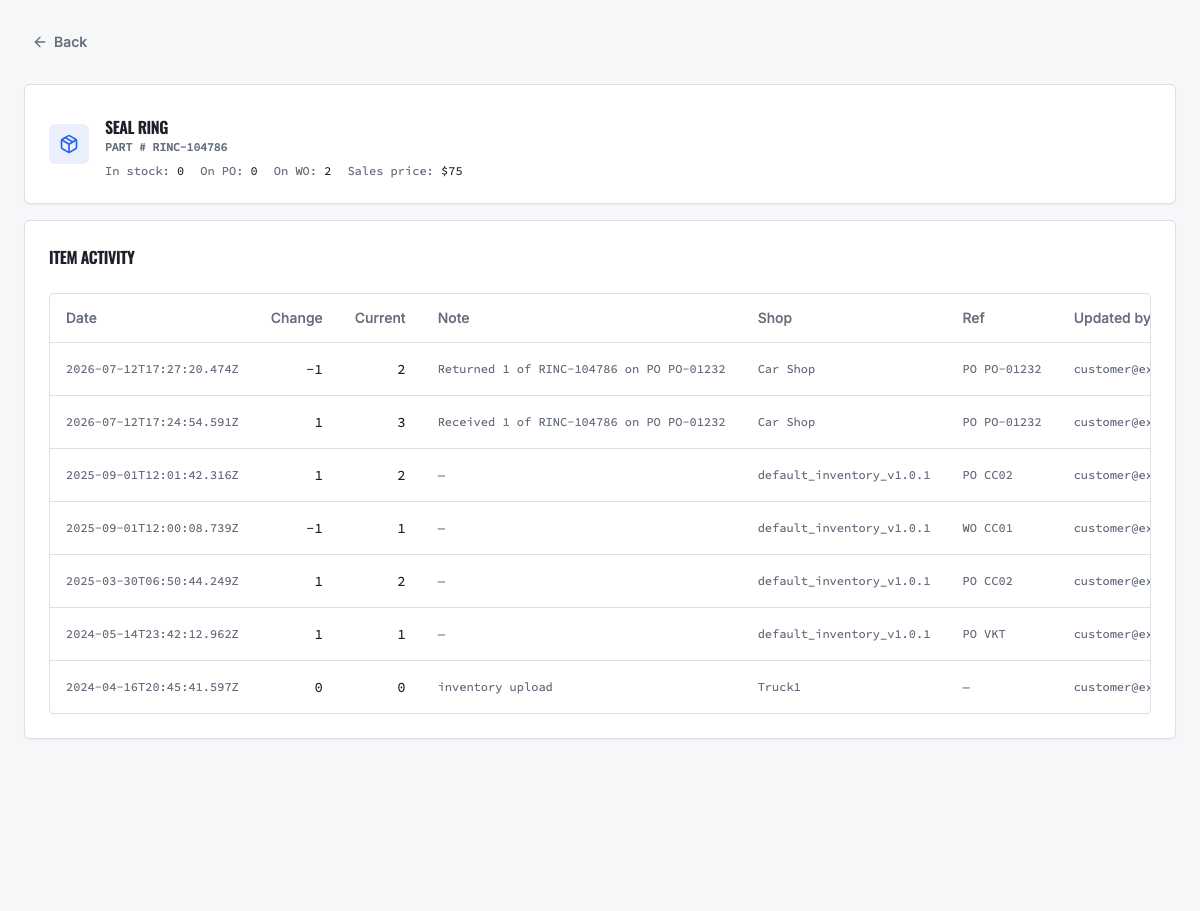
- Transfer activity identifies source, destination, actors, status, quantities and cost evidence.
- A transfer creates neither vendor purchase spend nor customer revenue.
- Parts cost follows the item into destination stock and reaches job cost when consumed.
05
5. Confirm customer communication
Use the customer's permitted contact channel and preserve delivery status. A sent message does not equal approval, payment or receipt. Continue only from the authoritative decision or transaction status. Email and SMS availability depends on the shop's connected providers, customer contact data and consent settings.
- Operational notifications should identify request, approval/dispatch and destination receipt as configured.
- Notify the customer that the part is ready only after destination availability is confirmed.
06
6. Completion checklist
The journey is complete only when the final business outcome and the expected audit trail agree. Record any failed check, correct configuration or source data, and rerun the scenario from a clean test record.
- Company total quantity is preserved except documented damage/short handling.
- Destination stock appears only at the correct lifecycle point.
- The subsequent work order consumes from destination and the shop P&L receives the part cost.
Related product areas
Understand the capability behind the task
Continue to the applicable platform page for workflow behavior, role differences and connected operating consequences.
Ready to move forward?
Need help with your configuration?
Existing customers should use in-product support for account-aware assistance. Evaluation teams can contact us to discuss requirements.